More renters own pets than ever, and that shift is changing what tenants look for in a home. Landlords weighing whether to make their rental properties pet friendly are really weighing a simple question: how much of the renter pool am I willing to turn away? For owners in Pearland and across the Houston area, that question has a clearer answer than it used to, and the local data is worth a closer look before setting a pet policy.
This article walks through what the current rental market shows about pet policies, the legal distinctions landlords need to understand, and practical ways to keep rental properties pet friendly without taking on unnecessary risk. It also looks at when working with a pearland property management team makes that process easier.
Table of Contents
Current Market Overview
Nationally, pet ownership among renters has climbed steadily. Zillow’s analysis of more than 11 million rental listings found that 57 percent of rentals allowed pets last year, and listings that did were leased about eight days faster than listings that did not (Zillow, 2025). Pet-friendly listings also drew more views, saves, and shares, which points to real demand rather than a minor preference.
The Houston area shows an interesting local wrinkle. Zillow’s data found Houston had the lowest share of pet-friendly rental listings among major Texas metros, at just 38 percent, compared to Austin at 80 percent, Dallas at 79 percent, and San Antonio at 78 percent (Zillow, 2025). That gap suggests landlords in the greater Houston area, including Pearland, may face less competition if they choose to make their rental properties pet friendly, though actual demand can still vary by neighborhood, price point, and property type. In a market where fewer listings are pet friendly, a landlord who opens up rental properties pet friendly to tenants stands out with less effort than in a market already saturated with pet-friendly options.
Major Factors Landlords Should Weigh
Tenant Demand and Vacancy Risk
A large share of renters search specifically for pet-friendly housing, and a no-pets policy can shrink an owner’s applicant pool before a single showing happens. Rental properties pet friendly in design and policy tend to attract a broader range of applicants, which can shorten vacancy periods, particularly in a market like Houston where pet-friendly supply is limited relative to demand.
Property Wear and Liability
Pets can also mean added wear on flooring, doors, and yards, along with some liability exposure if an animal causes injury or property damage. Landlords do not have to ignore these risks to keep rental properties pet friendly. The goal is managing the risk with the right lease terms and screening, not avoiding pet-owning tenants altogether. A thoughtful approach to rental properties pet friendly design, such as durable flooring or a fenced yard, can reduce wear before it starts.
How Pet Policies Affect Landlords Day to Day
Setting the Policy in the Lease
A pet policy belongs in the Texas lease agreement itself, not in a verbal understanding. The lease should spell out which animals are allowed, any breed, size, or number limits, and what fees or deposits apply. Clear terms protect both sides if a dispute comes up later.
Pet Deposits and Fees
Texas does not cap the amount a landlord can charge for a pet deposit or fee, and the market largely sets the going rate. Landlords should be careful to separate a refundable pet deposit, which is treated like a security deposit and returned under the same rules, from a non-refundable pet fee, which covers costs like extra cleaning. Mislabeling one as the other in the lease can create confusion if a tenant disputes a deduction.
Assistance Animals Are Not Pets
This is one of the most misunderstood areas of rental properties pet friendly policy. Under the federal Fair Housing Act, service animals and emotional support animals are not considered pets, even in a property with a strict no-pets policy. Landlords generally cannot charge a pet deposit, pet fee, or pet rent for an approved assistance animal, and cannot apply standard breed or size restrictions to one (Texas Law Help, n.d.). A landlord can still deny a request if the animal poses a direct threat or if the tenant cannot provide reasonable documentation of the disability-related need, but blanket denials based on a no-pets policy generally will not hold up.
Practical Strategies for Managing Rental Properties Pet Friendly
Turning a rental property into a place that works for both pet owners and the property itself takes a bit of planning. These practical steps apply whether a landlord is opening rental properties pet friendly for the first time or refining an existing policy:
- Set a clear, written pet policy in every lease, including size and breed terms if used.
- Charge a documented pet deposit or fee, but keep the two categories separate in writing.
- Require proof of vaccinations and, where appropriate, renter’s insurance covering pet liability.
- Document property condition at move-in and move-out to identify pet-related wear accurately.
- Train staff or yourself to recognize the legal difference between a pet and an assistance animal.
- Reassess pet policy terms at each lease renewal to reflect current market conditions.
These steps let a landlord keep rental properties pet friendly while still protecting the property and staying compliant with fair housing rules.
Legal and Risk Management Considerations
Fair Housing Compliance
Because assistance animals are a fair housing issue rather than a pet policy issue, landlords should train themselves or their staff to handle accommodation requests separately from standard pet applications. Treating every request the same way, regardless of whether it involves a pet or an assistance animal, is one of the most common compliance mistakes.
Insurance Considerations
Some landlord insurance policies exclude coverage for injuries caused by certain dog breeds or otherwise limit pet-related liability. Reviewing a policy with an insurance agent, or with a pearland property management team familiar with local carriers, helps avoid a coverage gap if an incident occurs.
Documentation Protects Everyone
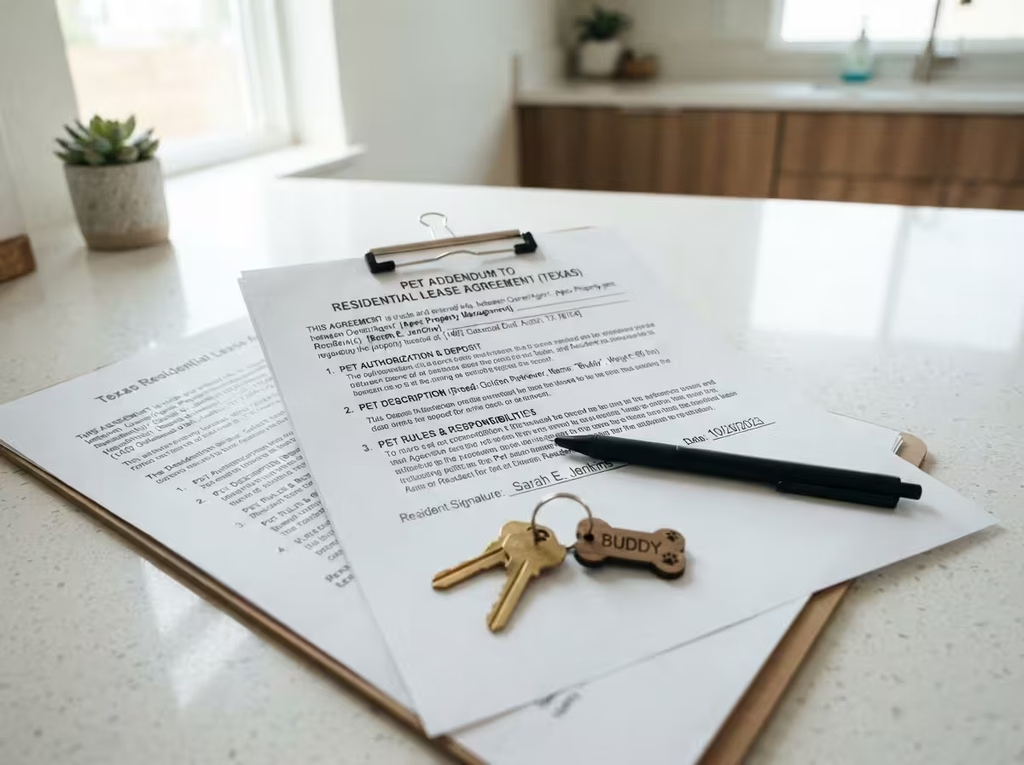
Whether a dispute involves a security deposit, a pet deposit, or an assistance animal request, the landlord in the stronger position is almost always the one with clear, dated documentation. A written policy, a signed lease addendum, and move-in photos go a long way toward resolving disagreements before they escalate.
How Property Management Can Help
Deciding how to structure a pet policy, screen pet-owning applicants, and stay current on fair housing obligations takes ongoing attention that not every owner has time for. This is where property management pearland owners rely on can help landlords make confident decisions about rental properties pet friendly policy without guessing at the legal details.
At Oak Loop Properties, the approach to property management pearland owners rely on includes tenant placement services that screen pet-owning applicants consistently, along with property maintenance services that address pet-related wear before it becomes a bigger repair. Oak Loop Properties was built on the idea that managing a rental home should feel personal, not transactional, and that includes helping owners weigh whether opening their rental properties pet friendly is the right move for their specific property and market.
For landlords who are unsure where to start, pearland property management guidance can make the difference between a pet policy that attracts reliable tenants and one that creates unnecessary risk. Owners who are new to the idea of rental properties pet friendly often find that a pearland property management partner can screen applicants and draft lease language more efficiently than starting from scratch alone.
Frequently Asked Questions
Are rental properties pet friendly more in demand than ones that do not allow pets? Yes. National data shows pet-friendly rentals lease faster and draw more interest online than comparable listings that exclude pets, and Houston in particular has a smaller share of pet-friendly listings than other major Texas metros.
Can a Texas landlord charge a pet deposit? Yes. Texas does not cap the amount a landlord can charge for a pet deposit or fee. Landlords should keep the refundable deposit separate from any non-refundable pet fee in the lease.
Can a landlord deny an emotional support animal in a no-pets property? Generally, no, unless the animal poses a direct threat or the tenant cannot provide reasonable documentation. Assistance animals are treated as a fair housing accommodation, not as pets.
What should landlords include in a pet policy? A written pet policy should cover which animals are allowed, any breed or size limits, applicable fees or deposits, and expectations around property care. Keeping this in the lease itself avoids confusion later.
When should a landlord consider professional property management? Landlords who want help screening pet-owning tenants, drafting compliant pet policies, or navigating a fair housing accommodation request often benefit from professional support that keeps the process consistent and defensible.