Owning a commercial property in Texas can be a good way to build long term wealth. But being a property owner also comes with rules and duties. You need to know what you can do, what your tenants can expect, and how to protect your property.
This is why learning about commercial property laws is important. These laws can affect leases, rent, repairs, tenant rights, property taxes, and eviction matters.
Commercial property can include an office, store, warehouse, restaurant, or other business space. The rules for these properties are not always the same as the rules for homes and apartments.
For owners who use property management pearland or oak loop properties, knowing the basic rules can make property care much easier. A good management plan can also help prevent small problems from becoming large legal or money problems.
This guide explains the main things Texas commercial property owners should know. The goal is to make the topic clear and easy to understand.
Table of Contents
What Are Commercial Property Laws?
Commercial property laws are rules that guide how commercial real estate is owned, rented, used, and managed.
Texas Property Code Chapter 93 applies to the relationship between landlords and tenants of commercial rental property. It includes rules about utilities, access to leased space, locks, and some actions involving tenant property. (Texas Legislature, 2025).
These laws matter because a landlord cannot always act based only on what seems fair. The lease and Texas law both need to be considered.
A property owner should understand the basic rules before making a major decision about a tenant or building.
For pearland property management, this means having clear steps for rent, repairs, leases, tenant concerns, and property records.
Why Commercial Rules Matter
Good knowledge of commercial property laws can help owners lower risk.
Imagine a tenant stops paying rent. The owner may feel that changing the locks is the fastest answer. But Texas law has rules about when a landlord may prevent a tenant from entering a leased space.
Texas Property Code Chapter 93 is one of the commercial property laws that addresses landlord and tenant rights. It generally prohibits a landlord from intentionally preventing a commercial tenant from entering the leased property except through judicial process, with certain exceptions. The law also has rules about changing locks when rent is delinquent. (Texas Legislature, 2025).
This shows why owners should not make quick decisions during a tenant dispute.
A property management pearland or oak loop properties team can help keep records and follow a clear process. When problems happen, good records can be very useful.
Commercial Lease Agreements Matter
One of the most important parts of commercial property laws is the lease.
A commercial lease is a legal agreement between the property owner and the business tenant. It explains what each side must do.
A good lease should clearly explain the rent amount, payment date, late fees, lease length, renewal terms, and allowed use of the property. Understanding commercial property laws can also help owners create lease terms that follow applicable rules.
It should also explain who pays for repairs and other costs.
For example, the owner may handle major building repairs while the tenant handles certain daily maintenance. The exact duties should be written in the lease.
Clear terms can reduce confusion later.
Owners who need help with lease documents can review professional lease agreement services.
For pearland property management, a clear lease is one of the best tools for keeping the landlord and tenant on the same page.
Tenant Use of the Property
Another important part of commercial property laws is how the tenant uses the building.
A lease should say what type of business may operate on the property.
For example, an office space may be leased for professional services. A retail space may be used for selling goods. A warehouse may be used for storage.
A tenant should not assume that any business activity is allowed.
The owner should review the lease, local rules, zoning requirements, and other applicable laws before approving a new use.
For property management pearland or oak loop properties, checking the planned use before signing a lease can help prevent problems later.
This is especially important when a new tenant wants to make changes to the building.

Repairs and Property Maintenance
Property maintenance is another important part of commercial property laws and good risk management.
A broken roof, leaking pipe, damaged door, or faulty air conditioner can create bigger problems if it is ignored.
Owners should have a clear way for tenants to report repairs. They should also keep records of the request, the work completed, and the cost.
Fast action can help protect the building and reduce the chance of a small issue becoming a major repair. Understanding commercial property laws can also help owners meet their legal responsibilities for maintaining safe and functional properties.
Owners can use professional property maintenance services to help keep repairs organized.
For pearland property management, regular property checks can also help find problems before tenants report them.
The goal is simple. Keep the property safe, useful, and in good condition.
Understanding Commercial Property Taxes
Property taxes are another major concern for commercial owners. Understanding commercial property laws can help owners stay informed about their tax responsibilities.
Texas does not have a state property tax. Property taxes are handled by local taxing units. County appraisal districts determine property values, while local taxing units set tax rates. (Texas Comptroller of Public Accounts, 2026).
Texas appraisal districts generally value taxable property as of January 1. The Texas Comptroller explains that market value is used in most cases when property is appraised. (Texas Comptroller of Public Accounts, 2026).
Owners should pay attention to appraisal notices and tax information. Understanding commercial property laws can also help owners recognize their rights when reviewing property assessments.
A property owner who believes an appraisal is wrong may have rights to protest the value. The local appraisal district is the main place to ask about the process.
For property management pearland or oak loop properties, keeping tax records in one place can make property planning easier.
Property managers can help organize documents, but owners should speak with a tax professional or attorney when they need advice about a specific tax issue.
Rent Collection and Payment Records
Rent collection is a basic part of commercial property laws and property management.
The lease should clearly state when rent is due and what happens if payment is late.
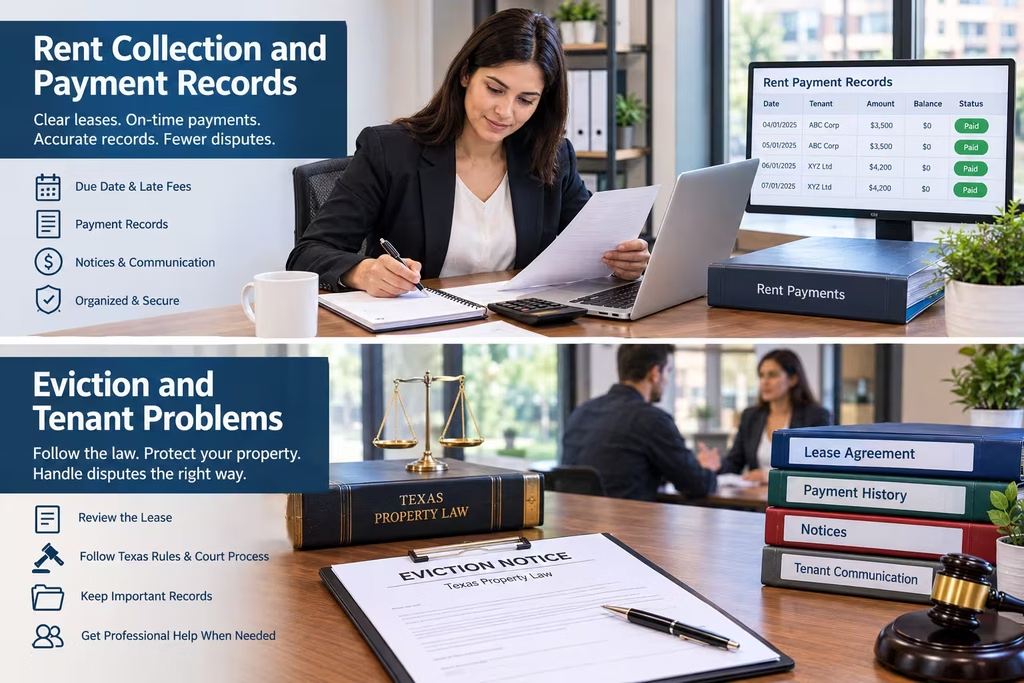
Owners should also keep a clear record of every payment. This can include the payment date, amount, balance, and any notices sent to the tenant.
Good records can help if the owner and tenant disagree about money.
Professional rent collection services can help owners keep payments organized.
For pearland property management, having a clear rent system can also make communication easier.
A tenant should know when rent is due and what may happen if payment is not made on time.
Eviction and Tenant Problems
Eviction is one area where commercial property laws should be handled with care.
A landlord should not treat an eviction as a simple disagreement. The lease, notices, state law, and court process may all matter.
Texas has rules for removing tenants from leased property. A landlord should follow the correct process instead of taking action without checking the law.
This is important because a wrong step can lead to delays or another legal dispute.
Owners can review professional eviction process services for help with the management side of the process.
For pearland property management, keeping copies of the lease, payment history, notices, and tenant communication can be very helpful when a dispute occurs.
When a legal question is complex, an attorney should be consulted.
Lease Renewal and New Terms
Lease renewal is another important area of commercial property laws.
A renewal gives the owner and tenant a chance to review the current agreement.
Before renewing, the owner should look at the tenant’s payment history, property condition, rent amount, repair costs, and future plans.
The owner may also want to update lease terms if the business use or property needs have changed.
A written renewal is better than relying on a verbal promise.
Owners can review lease renewal agreement services when preparing for a new lease period.
For property management pearland or oak loop properties, tracking lease expiration dates is also important. Missing a renewal date can create unnecessary stress.
How Property Managers Help Reduce Risk
Understanding commercial property laws is only one part of owning a commercial property.
Owners also need to manage tenants, rent, repairs, records, inspections, and lease dates.
This can become difficult when an owner has several properties or a busy schedule.
A professional property manager can help organize these tasks. The manager may help with tenant placement, lease documents, rent collection, repairs, communication, renewals, and eviction coordination.
For pearland property management, this type of support can give owners a more organized way to manage their investments.
Professional tenant placement services can also help owners find and place tenants while keeping the leasing process organized.
The main goal is not only to avoid legal problems. It is also to create a clear system that works every day.
A Simple Way to Manage Commercial Property
The best approach to commercial property laws is to stay organized.
Start with a clear lease. Make sure both sides understand the rules.
Keep records of rent and tenant communication. Respond to repair requests in a timely way. Track lease dates and property taxes. When a dispute happens, review the lease before taking action.
Owners should also avoid guessing when a legal issue is serious.
The Texas Comptroller provides helpful information about property taxes, but it states that its materials are not a substitute for legal advice. Questions about interpreting or applying the law should be directed to an attorney or another qualified professional. (Texas Comptroller of Public Accounts, 2026).
This is a good rule for property owners in general. Learn the basics, keep good records, and get professional help when the issue is beyond normal property management.
Protect Your Property With Better Management
Understanding commercial property laws can help Texas property owners make better choices. It can also help reduce mistakes involving leases, tenants, repairs, rent, taxes, and property access.
For owners in Pearland and nearby areas, strong management starts with clear communication and good records.
If you need property management pearland or oak loop properties support, professional help can make daily property tasks easier to manage. A good management process protects the property while also giving tenants a clear and professional experience.
Learn more about property management services from Best Pearland Property Management and take a more organized approach to protecting your real estate investment.