Renting out individual rooms instead of a whole property increases risks for landlords. A room lease agreement must address issues a standard lease doesn’t, such as shared spaces, divided utilities, and eviction rights.
For landlords in Pearland, whether using property management or renting independently, a clear room lease is crucial. This guide outlines what the document should include, Texas rules for shared housing, and common landlord challenges.
Table of Contents
What a Room Lease Agreement Covers
A room lease agreement is a binding contract for renting a single room in a shared space. It defines exclusive areas for tenants, shared spaces, and how utility costs are split.
In Texas, room rentals are not classified separately. The same protections apply, such as the right to a habitable dwelling and the landlord’s obligation to provide a lease copy within three business days (Tex. Prop. Code § 92.024). Even if it covers less space, a room lease must meet these basic requirements.
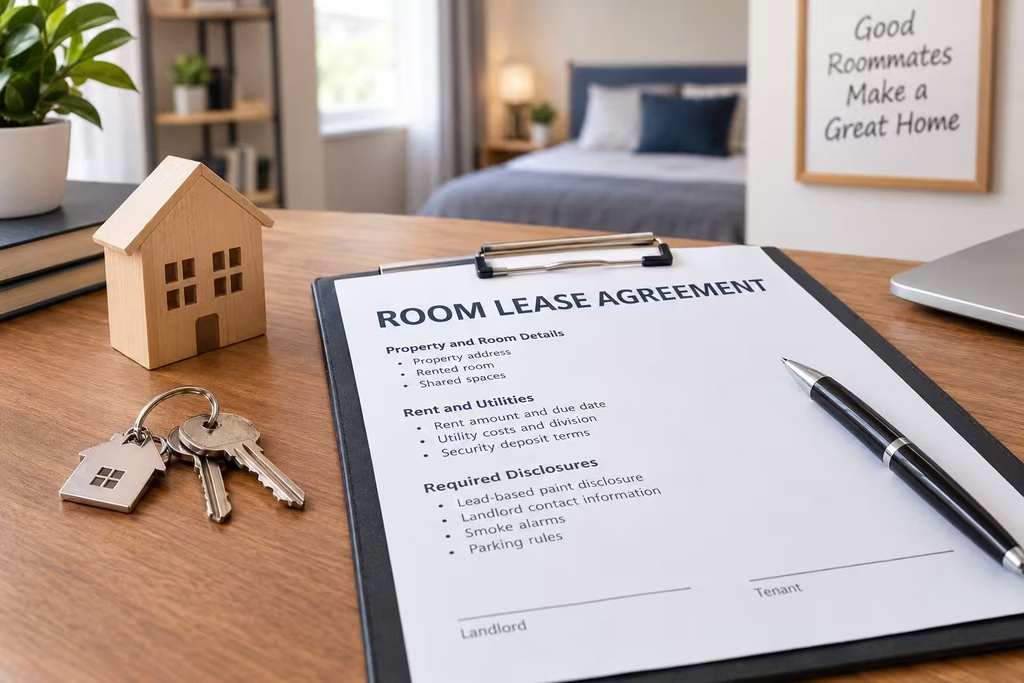
Core Terms Every Room Lease Agreement Should Include
A shared room lease needs more details than a whole-property lease due to multiple tenants sharing one address.
Property, Room, and Shared Space Details
The agreement should specify the property address, the rented room, and common areas for tenant use. If multiple tenants sign for the same property, each person’s designated space must be clearly outlined to prevent disputes.
Rent, Utilities, and Deposits
The lease should detail the rent amount, due date, and how utilities like electricity, water, gas, and internet are divided. Texas does not cap security deposits, but landlords must return them within 30 days of move-out, along with an itemized list of deductions. Missing this deadline without valid reasons can result in losing the right to withhold any portion.
Required Disclosures and Safety Features
A Texas room lease agreement must include certain disclosures, regardless of tenant occupancy:
- Lead-based paint disclosure for homes built before 1978 (federal law)
- Landlord or property manager’s name and contact info (Tex. Prop. Code § 92.003)
- Working smoke alarms in each bedroom (Tex. Prop. Code § 92.255)
- Parking rules, as a new roommate may bring an extra vehicle
Omitting any of these elements can weaken a landlord’s position in court.
How Shared Housing Changes the Risk Picture
Renting by the room often leads to higher turnover than renting the whole property. Each vacancy affects only part of the rent, softening cash flow swings. However, screening tenants occurs more frequently. A lease with one tenant doesn’t automatically bind others unless everyone signs the same agreement.
Demand for shared housing in Pearland varies by neighborhood, price, and property type. Therefore, landlords shouldn’t assume demand for room rentals equals that for full units. Statewide, single-family rental rates are projected to rise to about $2,200 monthly, covering whole-unit rentals, not room-by-room rates (Texas Real Estate Research Center, 2026).
Practical Strategies for a Room Lease Agreement
A well-drafted lease anticipates common issues in shared living before they escalate into disputes.
Screen Every Tenant Individually
All tenants named in a room lease should undergo the same screening process, including income verification and background checks. A weak tenant can affect everyone’s experience. Many landlords use professional tenant placement services for consistent screening.
Clarify House Rules Up Front
The lease should clearly outline rules for guests, noise, cleaning, and use of common areas. Vague rules can lead to roommate conflicts, so having clear terms helps during disputes.
Structure Maintenance and Repairs Clearly
Every lease should explain how tenants report maintenance issues. It should also clarify who handles upkeep of common areas and individual rooms. Landlords with multiple shared properties often rely on property maintenance services to organize repair requests.
Keep Rent Collection Consistent
The lease should specify whether tenants pay rent individually or as a group, along with due dates and late fee policies. Individual payment plans reduce the risk of missed payments affecting everyone. Many landlords use professional rent collection services to manage multiple tenants efficiently.
Legal and Risk Management Considerations
Texas landlord-tenant law, primarily in Chapters 24, 91, and 92 of the Texas Property Code, applies to room rentals like whole-unit leases. Key points include:
- Co-tenants signing the same lease generally have equal rights to common areas.
- Texas landlords don’t need to give tenants a chance to fix violations before eviction. They can issue a 3-day notice to quit and start the formal process (Tex. Prop. Code § 24.005).
- Eviction must be processed through the courts. Landlords can’t change locks or remove belongings without following this process.
- Informal agreements between tenants don’t replace the legal obligations of a room lease with the landlord.
Landlords should also consider renewal timing for shared houses with staggered move-in dates. A lease renewal agreement for one tenant doesn’t automatically extend for others. Tracking renewal dates is vital. When conflicts arise, the Texas eviction process has specific notice and filing requirements that must be followed.
This article provides general information, not legal advice. Landlords facing unique issues should consult a qualified Texas attorney.
How Professional Property Management Can Help
Managing multiple tenants in one building requires more coordination than a single-tenant property. Pearland property management helps landlords ensure consistent screening, rent collection, and maintenance.
Oak Loop Properties has over four years of experience helping homeowners in Pearland find reliable renters. They believe managing a home should feel personal, not just transactional, and this extends to shared housing. They vet each tenant and enforce house rules fairly.
For owners choosing between self-management or hiring help, Pearland property management services can draft a Texas lease agreement for each tenant. They also manage shared maintenance and rent collection through Oak Loop Properties.
Frequently Asked Questions
Does a room lease agreement need to be in writing?
Texas law doesn’t always require a written lease for terms of one year or less, but a written agreement is highly recommended. With multiple tenants sharing a property, unwritten terms can lead to disputes over space, rent, and responsibilities.
Who is responsible for common areas in a shared rental?
Generally, all tenants named on a room lease have equal rights to use common areas like kitchens and living rooms. The lease should specify cleaning duties and any guest access restrictions.
Can a landlord evict one roommate without affecting the others?
Yes, if each tenant signed a separate room lease or if the lease clearly separates individual terms. Texas landlords can move directly to a formal eviction process without offering a chance to fix a violation.
How should utilities be handled in a room lease agreement?
The agreement should clearly state how utility costs are divided among tenants, whether equally or by another formula. Leaving utilities undefined can lead to disputes in shared housing.
When should a landlord consider professional property management?
Landlords should consider Pearland property management, especially when managing multiple tenants. Screening and rent collection can be time-consuming and challenging to handle alone.