A security deposit dispute is one of the fastest ways for a landlord to end up in court. Texas has clear rules for handling security deposits, and missing a single deadline can turn a routine move-out into an expensive legal problem. For landlords in Pearland and across the Houston area, understanding these requirements before a tenant ever moves in is the best way to avoid a dispute later.
This article walks through what Texas law actually requires, where landlords most often get it wrong, and how to handle a security deposit properly from move-in to move-out, whether an owner self-manages or works with a property management company in Pearland.
Table of Contents
What Texas Security Deposit Laws Actually Cover
Texas law defines a security deposit as any money a tenant pays, beyond an application fee or advance rent, that is meant to secure performance under a lease. The rules are found in the Texas Property Code, Chapter 92, Subchapter C, and they cover three main areas:
- How much a landlord can charge
- How and when the deposit must be returned
- What a landlord can and cannot deduct
Texas places no statutory cap on the amount of a security deposit. The market, not the law, sets that limit. Where the rules get strict is on the back end, once the tenant moves out.
Major Rules Landlords Need to Know
The 30-Day Return Deadline
Under Property Code Section 92.103, a landlord must return the security deposit, or provide a written itemization of any deductions, within 30 days after the tenant surrenders the property. That clock does not start automatically. The tenant must give the landlord a forwarding address in writing before the 30-day period begins.
This is one of the most important requirements for landlords to understand because missing the deadline carries real financial consequences. Under Section 92.109, a landlord who fails to return the deposit or provide an itemized statement within 30 days is presumed to have acted in bad faith. That presumption shifts the burden to the landlord to prove otherwise.
A landlord found to have acted in bad faith owes the tenant $100, plus three times the amount wrongfully withheld, plus the tenant’s reasonable attorney fees (Texas Property Code, 2026). This is the financial risk behind improper deposit handling, and on a modest deposit, the penalty can add up quickly once legal fees are included.
Permitted Deductions and Normal Wear and Tear
Texas law allows landlords to deduct specific, documented costs from a security deposit. Common allowable deductions include:
- Unpaid rent or late fees properly charged under the lease
- Damage to the property beyond normal wear and tear
- Cleaning costs, if the lease sets a specific move-out standard
- Unpaid utility charges the tenant was responsible for
- Replacement costs for missing items covered by the lease
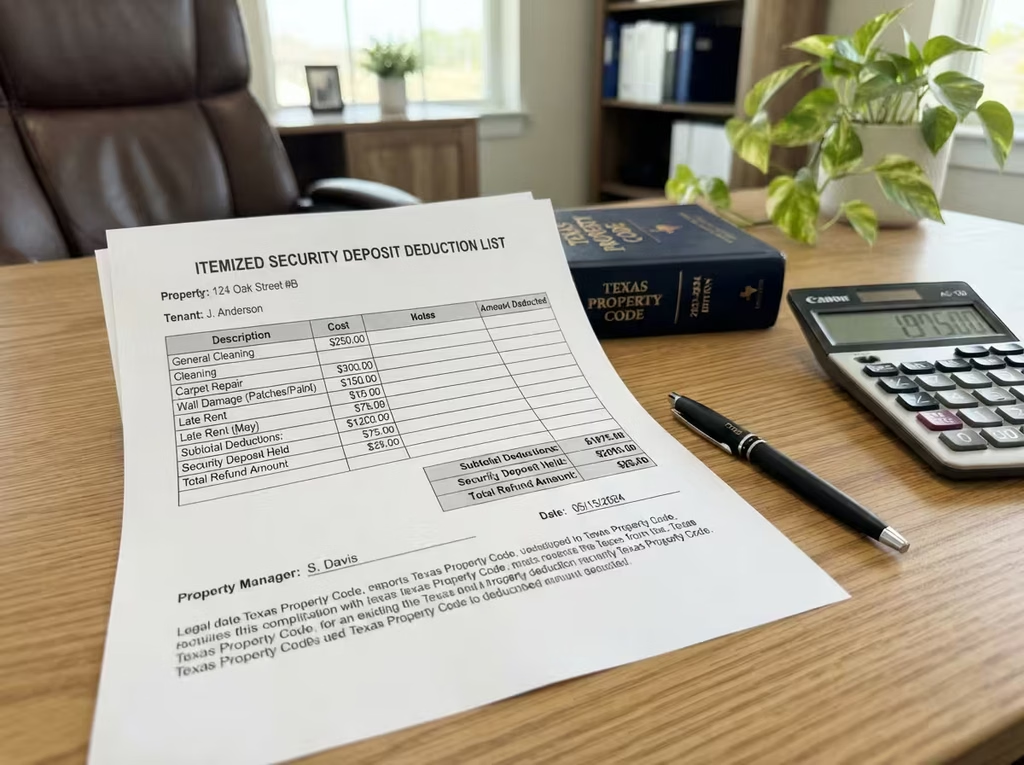
Normal wear and tear is not deductible. Texas courts generally treat wear and tear as the gradual deterioration that happens through ordinary use, not negligence or abuse. A worn carpet after several years of normal living is wear and tear. A large stain, burn, or tear usually is not. Any deduction should come with a clear, itemized explanation, since a vague or padded list is one of the fastest ways to trigger a bad-faith claim.
How These Rules Affect Landlords Day to Day
Deposit requirements do not exist in isolation. They connect directly to how a landlord handles the rest of the tenancy.
A well-documented Texas lease agreement should spell out the deposit amount, what it covers, and the condition standard expected at move-out. This gives both the landlord and tenant a clear reference point if a dispute arises.
Consistent professional rent collection services also matter here. If a tenant leaves owing back rent, a documented payment history makes it far easier to justify a deduction from the deposit and defend that deduction if challenged.
Move-in and move-out documentation is just as important. Texas law does not require a landlord to complete a written inventory at move-in, but skipping this step makes it much harder to prove what damage existed before the tenant moved in versus what happened during the lease.

Practical Strategies for Property Owners
Following these requirements does not require legal training, just a consistent process:
- Put the deposit amount and terms in writing in the lease itself.
- Take dated photos or video at move-in and again at move-out.
- Send the itemized deduction letter within 30 days, even if the amount withheld is zero.
- Keep receipts or estimates for any repair costs deducted from the deposit.
- Avoid charging for normal wear and tear, even under pressure to recoup costs.
- Track the tenant’s forwarding address the moment it is provided.
These habits help landlords meet their legal obligations if a dispute goes to justice court. They also build trust with tenants, which supports better tenant retention over time.
Legal and Risk Management Considerations
Documentation Is the Best Defense
Most security deposit disputes come down to documentation, not disagreement over the rules themselves. A landlord who can show dated photos, a signed lease with clear terms, and a timely itemization letter is in a strong position. A landlord who cannot produce any of that is vulnerable, regardless of how reasonable the original deduction may have been.
Application Deposits Are Different
Texas law distinguishes between an application deposit, which covers screening costs, and a security deposit, which secures performance under the lease. Mixing these up in a lease or in communication with a tenant can create confusion and, in some cases, legal exposure. Landlords should keep the two clearly separate in writing.
Eviction and Deposit Timing
If a tenancy ends through the Texas eviction process rather than a normal move-out, the same 30-day deposit rules generally still apply once the tenant has actually surrendered the property. Landlords should not assume an eviction changes the deposit timeline. When a lease is coming up for renewal instead, reviewing the lease renewal services terms is a good time to confirm the deposit amount still reflects current market conditions and property condition.
When to Involve an Attorney
Most deposit disputes can be resolved with clear documentation and a timely response. When a tenant threatens legal action or the amount in dispute is significant, landlords should consult a qualified Texas attorney rather than relying on general guidance, since individual circumstances can affect the outcome.
How Property Management Can Help
Handling deposit requirements correctly takes attention to deadlines and documentation that many self-managing landlords do not have time to track consistently. This is where professional property management in Pearland can reduce risk.
At Oak Loop Properties, the approach includes structured move-in and move-out documentation, consistent tenant placement services, and property maintenance services that help distinguish tenant damage from normal wear and tear before a dispute ever starts.
Oak Loop Properties was built on the idea that managing a rental home should feel personal, not transactional. For landlords weighing whether to manage a deposit process alone, the deciding factor often comes down to time, risk tolerance, and comfort navigating local property management deadlines without support. Good property management does not replace legal advice, but it does reduce the everyday risk of mishandling security deposits.
Frequently Asked Questions
What are the laws regarding security deposits in Texas? Texas law requires landlords to return a tenant’s security deposit, or provide a written itemization of deductions, within 30 days after the tenant moves out and provides a forwarding address. There is no cap on the deposit amount, but deductions must be documented and cannot include normal wear and tear.
How long does a Texas landlord have to return a security deposit? A landlord has 30 days from the date the tenant surrenders the property, once a forwarding address has been provided in writing. Missing this deadline creates a legal presumption of bad faith.
What can a landlord deduct from a security deposit? Landlords can deduct unpaid rent, tenant-caused damage beyond normal wear and tear, required cleaning costs, and unpaid utility charges the tenant owed. Every deduction should be itemized in writing.
What happens if a landlord keeps a deposit in bad faith? A landlord who withholds a deposit in bad faith can owe the tenant $100, three times the amount wrongfully withheld, and the tenant’s attorney fees. This penalty makes documentation essential.
When should a landlord consider professional property management? Landlords who manage multiple properties, live outside the area, or want a documented process for deposits and move-out inspections often benefit from professional support that keeps deposit handling compliant and defensible.