Renting out a house is a business, whether the owner thinks of it that way or not. The moment a homeowner signs a lease, collects a deposit, or accepts a rent payment, that property is operating under commercial property laws designed to protect both the owner and the tenant. Understanding those rules is not optional. It is the difference between a rental that runs smoothly and one that lands in court.
For landlords in Pearland and the greater Houston area, 2026 brought some of the biggest changes to Texas rental law in years. New eviction procedures, security deposit disputes, and habitability requirements all fall under the umbrella of commercial property laws that govern how a rental home must be operated. Anyone offering pearland property management services, or simply managing one rental on their own, needs a working knowledge of these rules to stay compliant.
Table of Contents
What Commercial Property Laws Mean for Rental Property Owners
People searching for commercial property laws are usually looking for the rules that apply once a property becomes an income-producing asset rather than a personal residence. For a single-family rental, that body of law is anchored in the Texas Property Code, Title 8, which covers landlords and tenants.
These commercial property laws set the baseline for nearly everything a landlord does:
- How a lease must be written and enforced
- How security deposits are collected, held, and returned
- What repairs a landlord must make and how quickly
- How rent is collected and late fees are applied
- How an eviction must be filed and carried out
Ignoring any one of these areas can expose a property owner to penalties, lawsuits, or a stalled eviction. That is why commercial property laws deserve the same attention a landlord gives to rental pricing or tenant screening.
Major Factors Shaping Commercial Property Laws in 2026
The Texas Property Code Framework
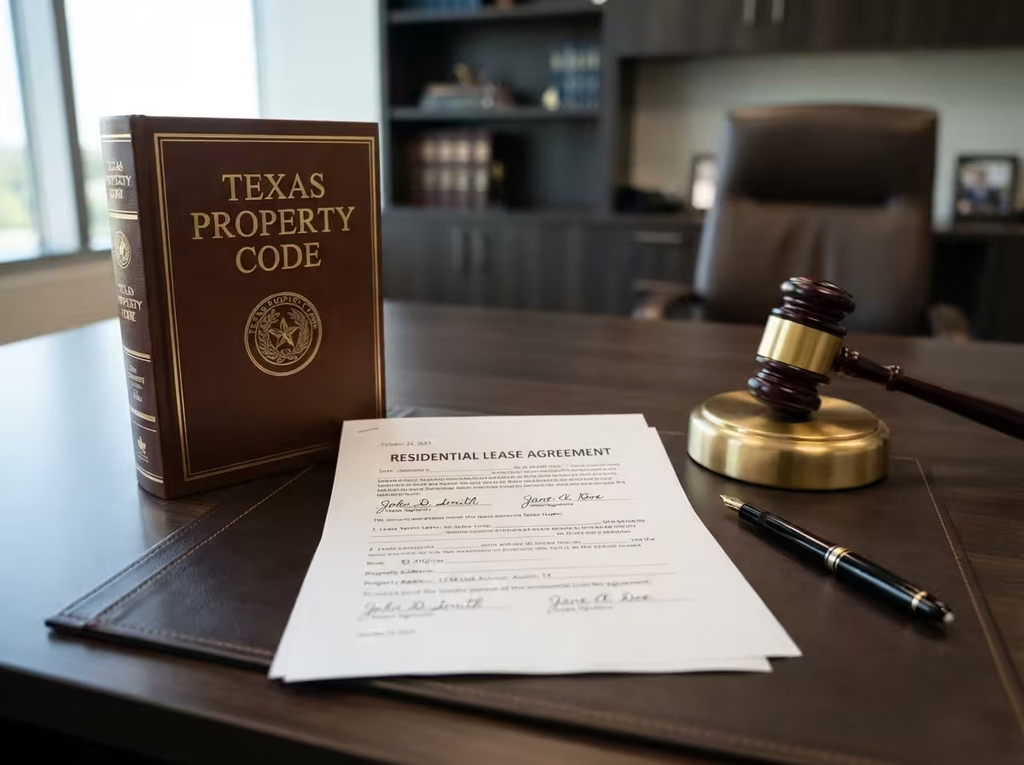
Texas landlord-tenant law is governed primarily by Property Code Chapters 91 through 94. Chapter 92 covers most of what a landlord deals with day to day, including deposits, repairs, and lease termination rights. Landlords should verify current statute language before major decisions, since sections are amended periodically.
Senate Bill 38 and the New Eviction Rules
The most significant recent change to commercial property laws affecting Texas landlords is Senate Bill 38, effective January 1, 2026, which applies to eviction suits filed on or after that date. The bill rewrote large portions of Property Code Chapter 24 and prompted the Texas Supreme Court to overhaul Rule 510 of the Texas Rules of Civil Procedure (Bell Nunnally, 2026).
Under the new framework, justice courts hearing eviction cases focus exclusively on the right to possession. Tenants can no longer raise unrelated counterclaims to delay a hearing; those claims must be filed separately (Bell Nunnally, 2026). The law also authorizes electronic delivery of eviction notices when the lease allows it, and requires tenants who appeal a judgment to swear the appeal is made in good faith. For landlords, this generally means faster eviction timelines, though a missed deadline or improperly served notice can still get a case dismissed.
How These Commercial Property Laws Affect Landlords Day to Day
Security Deposits
Texas places no cap on the deposit amount, but the return process is strictly regulated. Under Property Code Section 92.103, a landlord must return the deposit, with an itemized list of deductions, within 30 days after the tenant surrenders the property and provides a forwarding address.
Missing that deadline creates a rebuttable presumption of bad faith, and a landlord found to have acted in bad faith can owe the tenant $100, three times the amount wrongfully withheld, and attorney fees (Texas Property Code, 2026). This is one of the most litigated areas of commercial property laws in Texas, and it is largely avoidable with a documented move-out inspection and a clear itemization letter.
Habitability and Repairs
Texas landlords must make a diligent effort to repair conditions that materially affect a tenant’s health or safety once notified in writing. The law presumes seven days is a reasonable time for non-emergency repairs, though that presumption can be extended for legitimate reasons (Texas Office of the Attorney General, n.d.). Conditions like no heat or sewage backups require a faster response. Failing to repair on time can let a tenant terminate the lease, deduct repair costs from rent, or seek a court order compelling the repair.
Lease Structure and Rent Collection
A well-drafted Texas lease agreement is the foundation of compliant commercial property laws practice. Leases should state the rent amount, due date, late fee terms, maintenance responsibilities, and entry procedures, and cannot waive a tenant’s statutory rights even if both parties sign off on that language.
Consistent rent collection matters for cash flow and legal protection. Landlords who use professional rent collection services benefit from documented payment histories, which matter if a dispute or eviction reaches court.

Practical Strategies for Property Owners
Staying ahead of commercial property laws does not require a law degree, just consistency:
- Put every lease term in writing and avoid verbal side agreements.
- Document the property’s condition with photos at move-in and move-out.
- Track repair requests and response times.
- Return security deposits within 30 days, with an itemized letter, even if the amount is zero.
- Screen every applicant using the same criteria to avoid fair housing complaints.
- Keep a calendar of lease renewal and notice deadlines.
These habits reduce legal exposure and tend to improve tenant retention.
Legal and Risk Management Considerations
Fair Housing Compliance
Federal and Texas law prohibit discrimination in advertising, screening, and leasing decisions based on protected classes. Landlords should apply the same screening criteria to every applicant and document the reasoning behind approvals and denials.
Insurance and Liability
A standard homeowner’s policy is usually not enough once a property is rented out. Landlords typically need a dwelling or landlord policy covering liability, lost rental income, and tenant-caused damage. An agent familiar with rental properties can help match coverage to the risks of a leased home.
The Eviction Process
When a lease violation cannot be resolved, Texas law requires a specific sequence: a written notice to vacate, a filing in justice court if the tenant does not leave, a hearing, and, if the landlord prevails, a writ of possession. Since Senate Bill 38 took effect, the Texas eviction process moves faster, but every step still has to be documented and served correctly. Landlords unsure about notice requirements or court procedure should consult a qualified Texas attorney before filing.
Lease Renewals
Lease renewal decisions carry their own considerations, including notice periods and rent changes. Lease renewal services should be handled with the same care as the original lease, since renewal terms become the new binding contract.
How Property Management Can Help
Not every property owner wants to track statute changes, court deadlines, and repair timelines on top of a full-time job or a growing portfolio. This is where professional pearland property management becomes a practical option rather than a luxury.
At Oak Loop Properties, the approach to property management pearland owners can rely on centers on staying current with Texas Property Code changes and managing the details that keep a rental compliant throughout the life of the lease. That includes tenant placement services, lease drafting, rent collection, and property maintenance services that keep small issues from becoming legal problems.
Oak Loop Properties was built on the idea that managing a rental home should feel personal, not transactional. For owners weighing whether to self-manage, the deciding factor often comes down to time, risk tolerance, and comfort navigating pearland property management alone. Good property management pearland landlords trust does not replace legal advice, but it reduces day-to-day exposure under commercial property laws.
Frequently Asked Questions
What are the biggest legal risks landlords face under Texas commercial property laws? The most common risks involve mishandled security deposits, incomplete repairs, and improperly executed evictions. Each has specific statutory deadlines and penalties, so documentation and timely action are the best protection.
How long does a Texas landlord have to return a security deposit? Under Property Code Section 92.103, a landlord must return the deposit or provide a written itemization of deductions within 30 days after the tenant moves out and gives a forwarding address. Missing this deadline can trigger a bad-faith penalty.
What changed with Senate Bill 38 in 2026? Senate Bill 38 streamlined the Texas eviction process, restricted unrelated counterclaims in justice court, allowed electronic delivery of eviction notices, and added a good-faith requirement for tenants who appeal a judgment.
How can a landlord reduce vacancy risk while staying legally compliant? Consistent tenant screening, a clear lease, and responsive maintenance all help retain good tenants. Rushing to fill a vacancy without proper screening tends to create bigger problems later.
When should a landlord consider professional property management? Landlords who own multiple properties, live out of the area, or feel uncertain about repair timelines, lease terms, or eviction procedure often benefit from pearland property management support that keeps a rental compliant with commercial property laws.