Owning a rental home in Texas can be a good way to build income and long term wealth. But being a landlord also comes with many duties. You need to collect rent, care for the home, work with tenants, and follow state rules.
This is why understanding landlord tenant law is so important.
Texas has rules that explain what landlords and tenants can do. These rules cover leases, repairs, security deposits, rent, notices, and evictions. Knowing these rules can help property owners avoid costly mistakes and keep good relationships with tenants.
For owners in Pearland, good management is even more important. Local rental demand can change, and owners must balance market conditions with legal duties. Understanding current real estate trends can also help owners make better rental decisions.
This guide explains the main Texas rental rules in clear and simple language.
Table of Contents
What Is Landlord Tenant Law?
Landlord tenant law is the set of rules that controls the relationship between a property owner and a renter.
In Texas, many of these rules are found in Chapter 92 of the Texas Property Code. The rules cover many parts of renting a home, including:
- Rental agreements
- Security deposits
- Repairs
- Safety features
- Tenant rights
- Landlord responsibilities
- Eviction procedures
- Lease termination
The lease is also very important. The Texas Attorney General explains that the rental agreement is one of the most important sources of information for both landlords and tenants under landlord tenant law. (Texas Office of the Attorney General, 2026).
A good lease should be clear. It should explain rent, payment dates, property rules, maintenance duties, and other important terms.

Why Texas Landlords Need to Know the Rules
A landlord may think that owning the property means they can make any rental rule they want. That is not true.
State law places limits on what landlords can do. At the same time, tenants also have responsibilities.
Understanding landlord tenant law helps owners make decisions based on facts instead of guesses.
For example, a landlord should know how to:
- Create a clear lease.
- Handle repair requests.
- Manage security deposits.
- Give proper notices.
- Keep good records.
- Follow the correct eviction process.
Good records are especially useful when a disagreement happens. Emails, receipts, photos, inspection reports, and written notices can help show what happened.
Landlord Duties for Repairs
Property maintenance is one of the most important parts of rental management. Understanding landlord tenant law helps property owners meet their responsibilities and protect tenants.
Under Texas law, landlords may have a duty to repair conditions that materially affect a tenant’s physical health or safety. The tenant must usually give proper notice before certain repair duties apply. (Texas Office of the Attorney General, 2026).
This can include serious problems with plumbing, electrical systems, heating, cooling, or other conditions that affect health and safety.
Landlords should not ignore repair requests.
A simple repair process can help:
- Receive the tenant’s request.
- Record the date and problem.
- Check how serious the issue is.
- Send the right person to inspect it.
- Complete needed work.
- Keep the invoice and repair record.
Owners looking for property management pearland or oak loop properties can benefit from having a clear maintenance system. Understanding landlord tenant law also helps owners manage their responsibilities.
The Texas Property Code also has rules about security devices and other safety requirements. (Texas Legislature, 2026)
Security Deposits in Texas
Security deposits can cause disagreements when a tenant moves out.
A landlord should keep clear records of the deposit and the condition of the home.
Texas law generally requires the landlord to return the security deposit within 30 days after the tenant surrenders the property, when the legal requirements are met. The tenant must also provide a forwarding address for the return of the deposit. (Texas Office of the Attorney General, 2026).
Landlords should understand the difference between normal wear and actual damage.
For example, an older carpet may show normal wear after years of use. That is different from serious damage caused by a tenant.
A move in inspection and move out inspection can help. Photos are also useful.
Good documentation supports landlord tenant law compliance and can make deposit decisions easier to explain.
Creating a Strong Rental Agreement
A clear lease can prevent many problems before they start.
The agreement should explain important details in simple language. It may cover:
- Monthly rent
- Due date
- Late payment rules
- Security deposit
- Utilities
- Pets
- Maintenance
- Occupancy
- Renewal terms
- Notice requirements
Owners should not add terms that conflict with state or federal law.
For owners who need help preparing rental documents, professional lease services can make the process more organized.
A strong lease also supports landlord tenant law compliance because both sides can clearly see their duties.
Owners using pearland property management services may also receive help with lease preparation and important lease dates.
Rent Collection and Late Payments
Rent collection should be simple and consistent.
The lease should explain when rent is due and how tenants should pay. Owners should also keep payment records.
If a tenant does not pay, the landlord should follow the lease and the proper legal process. Avoid making threats or taking action without checking the rules first.
For example, a landlord should not simply change the locks because rent is late.
Landlord tenant law includes rules about notices and legal eviction procedures. Following the correct steps can help reduce unnecessary disputes.
Professional rent collection services can also help owners keep better records and track payments.
What Happens During an Eviction?
Eviction is a serious legal process.
A landlord cannot simply remove a tenant from the property. The owner normally needs to follow the required notice and court process.
The exact steps can depend on the reason for the eviction and the terms of the lease.
Common reasons may include:
- Failure to pay rent
- Breaking important lease terms
- Staying after the lease ends in certain situations
Owners should keep copies of notices, payment records, the lease, and other related documents.
Understanding landlord tenant law is especially important before starting an eviction.
Professional eviction support can also help owners understand the steps and avoid common mistakes.
Tenant Rights and Responsibilities
Tenants have rights, but they also have duties.
Tenants should:
- Pay rent on time.
- Follow the lease.
- Keep the home reasonably clean.
- Report serious repair problems.
- Avoid damaging the property.
- Follow community rules.
Landlords must follow landlord tenant law. They must follow the lease, fix qualifying repair problems, respect tenant rights, and follow legal procedures.
The Texas Attorney General explains that tenants have rights to health, safety, quiet enjoyment, and certain repairs.
A fair rental relationship starts when both landlords and tenants understand their responsibilities.
Fair and Consistent Tenant Screening
Tenant screening is an important part of rental management.
Owners should use clear and fair screening rules for all applicants. They should choose tenants based on rental requirements, not personal preferences.
Screening may include income, rental history, and credit checks.
Owners should also understand landlord tenant law and federal fair housing rules before setting screening requirements.
For property owners seeking property management pearland or oak loop properties, professional tenant placement can help create a more organized screening process.
Why Record Keeping Matters
Good records are one of the simplest ways to reduce rental risk.
Keep copies of:
- Signed leases.
- Rent payments.
- Repair requests.
- Inspection reports.
- Photos.
- Notices.
- Security deposit records.
- Tenant communication.
When a dispute happens, memory is not enough. Written records give owners a clear history of what happened.
Strong record keeping is an important part of landlord tenant law compliance.
How Real Estate Trends Can Affect Rental Decisions
Legal rules are only one part of managing a rental property.
Owners should also track local real estate trends, rental demand, home prices, taxes, insurance, and repair costs.
Do not change rent based only on headlines. Compare similar homes, check your property’s condition, and review local vacancy rates.
For owners seeking pearland property management, understanding landlord tenant law can help with setting rent and planning lease renewals.
When Professional Property Management Makes Sense
Managing one rental home may seem easy at first. But the work can grow quickly.
You may need to:
- Answer tenant questions.
- Collect rent.
- Schedule repairs.
- Market vacant homes.
- Prepare leases.
- Track renewals.
- Handle notices.
- Manage difficult tenant situations.
This is where professional management can help.
Owners looking for property management pearland or oak loop properties can choose a service that handles daily rental tasks while keeping the owner informed.
A good manager should communicate clearly, keep records, and follow the law.
Professional management does not remove the owner’s legal responsibilities, but it can make daily operations more organized.
Common Mistakes Texas Landlords Should Avoid
Many rental problems come from simple mistakes.
Some common examples include:
- Using an unclear lease.
- Ignoring repair requests.
- Failing to document property damage.
- Applying screening rules differently to applicants.
- Keeping poor rent records.
- Forgetting important lease dates.
- Trying to remove a tenant without following the legal process.
Following landlord tenant law is easier when owners use clear systems.
When in doubt, owners should review the Texas Property Code or speak with a qualified Texas real estate attorney.
Final Thoughts for Texas Rental Property Owners
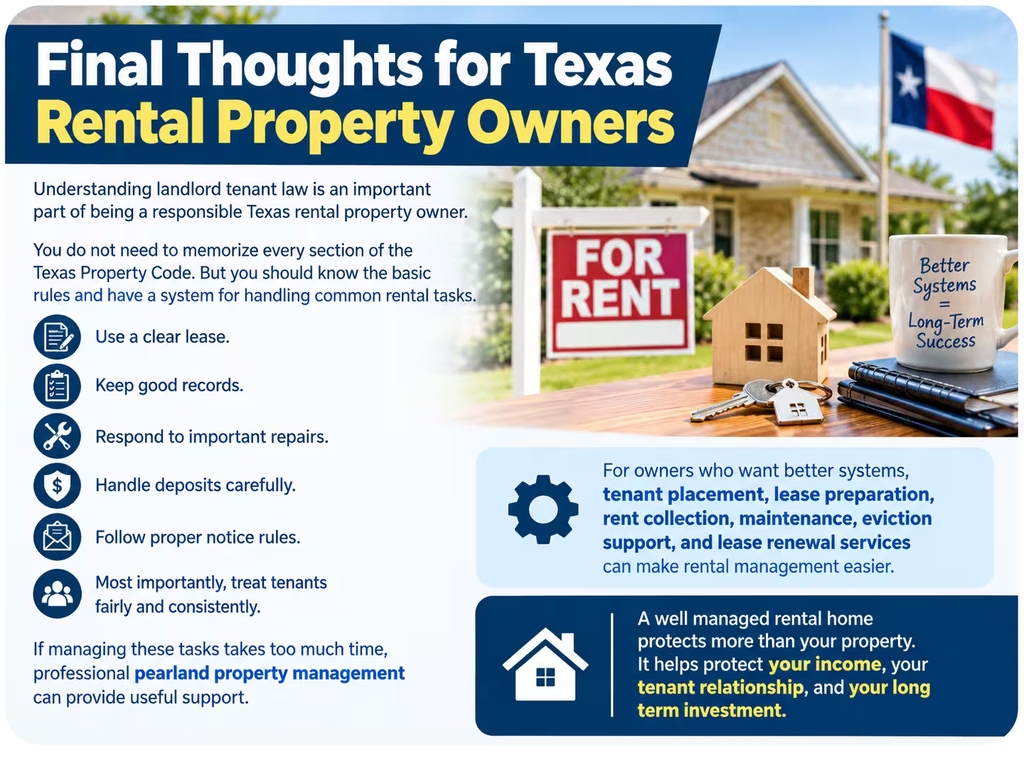
Understanding landlord tenant law is an important part of being a responsible Texas rental property owner.
You do not need to memorize every section of the Texas Property Code. But you should know the basic rules and have a system for handling common rental tasks.
Use a clear lease. Keep good records. Respond to important repairs. Handle deposits carefully. Follow proper notice rules. Most importantly, treat tenants fairly and consistently.
If managing these tasks takes too much time, professional pearland property management can provide useful support.
For owners who want better systems, tenant placement, lease preparation, rent collection, maintenance, eviction support, and lease renewal services can make rental management easier.
A well managed rental home protects more than your property. It helps protect your income, your tenant relationship, and your long term investment.